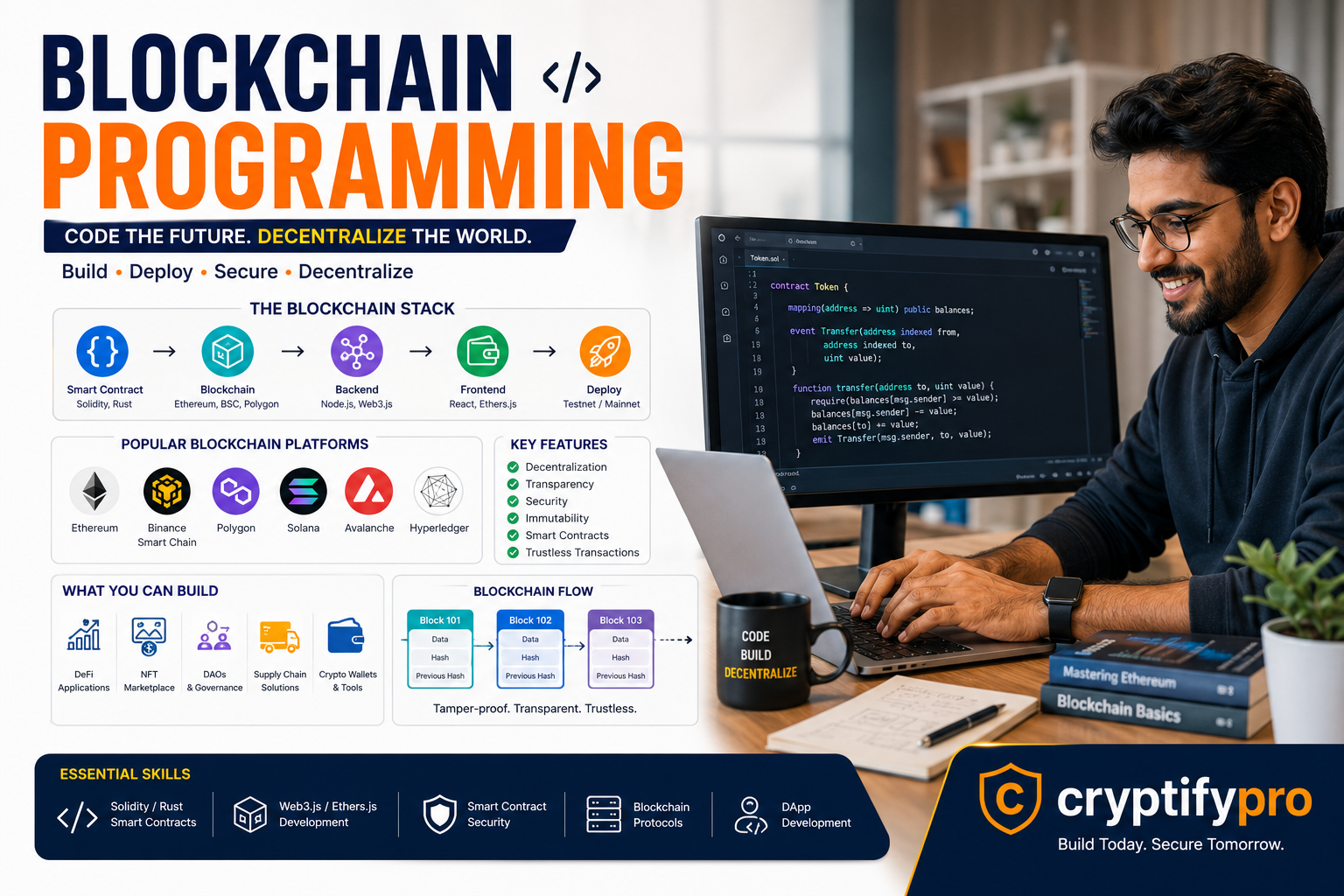
Blockchain technology has become one of the most talked-about innovations in the digital world. From cryptocurrencies like Bitcoin to smart contracts and decentralized apps, blockchain is changing how online systems work. As the industry grows, blockchain programming is becoming an important skill for developers and tech enthusiasts.
Many beginners search for questions like how to start blockchain programming, how blockchain works for beginners, or how to learn blockchain programming language. These are common questions because blockchain development can seem confusing at first.
The good news is that blockchain programming becomes easier once you understand the basic concepts step by step. You do not need to become an expert overnight. Most successful blockchain developers started by learning simple coding concepts and gradually building projects.
In this guide, you will learn everything about blockchain programming, including how blockchain works, how blockchain code is written, what languages are used, and how beginners can start learning blockchain development in a practical way.
What Is Blockchain Programming?
Blockchain programming is the process of developing applications, smart contracts, and systems that run on blockchain networks.
A blockchain is a digital ledger that stores data across multiple computers in a secure and decentralized way. Blockchain developers create the code that controls these systems.
Blockchain programming is commonly used for:
- Cryptocurrency platforms
- Smart contracts
- NFT marketplaces
- Decentralized finance apps
- Supply chain systems
- Digital identity platforms
Unlike traditional applications, blockchain systems focus heavily on security, transparency, and decentralization.
How Blockchain Works for Beginners
Before learning blockchain programming, it is important to understand how blockchain works for beginners.
Here is a simple explanation.
Blocks
A blockchain stores information inside blocks.
Each block contains:
- Transaction data
- Timestamp
- Unique identification code called a hash
Chain Structure
Every block connects to the previous block, creating a secure chain of data.
If someone changes one block, the entire chain becomes invalid.
Decentralization
Instead of storing data on one server, blockchain distributes information across many computers called nodes.
This makes blockchain more secure and difficult to manipulate.
Verification Process
Blockchain networks use consensus systems to verify transactions before adding them permanently to the chain.
Popular methods include:
- Proof of Work
- Proof of Stake
This is the basic foundation of how blockchain works.
How Does Blockchain Programming Work?
Many people ask how does blockchain programming work in real-world applications.
Blockchain programming involves writing code that interacts with blockchain networks.
Developers usually create:
- Smart contracts
- Decentralized applications
- Wallet systems
- Blockchain protocols
For example:
- A smart contract can automatically process payments
- A decentralized app can operate without central servers
- A crypto wallet can securely manage digital assets
Blockchain code must focus heavily on:
- Security
- Transparency
- Automation
- Data verification
Because blockchain systems often manage financial transactions, developers must test their code carefully.
How Blockchain Code Is Written
Many beginners wonder how blockchain code actually works behind the scenes.
Blockchain development uses different programming languages depending on the platform.
Solidity
Solidity is one of the most popular blockchain programming languages.
It is mainly used for:
- Ethereum smart contracts
- Decentralized applications
- NFT projects
Example use cases:
- DeFi apps
- Crypto tokens
- Blockchain games
JavaScript
JavaScript is commonly used for blockchain front-end development.
Developers use it to build:
- User dashboards
- Wallet interfaces
- Blockchain websites
Python
Python is beginner-friendly and often used for:
- Blockchain learning
- Automation
- Data analysis
- Testing
Rust
Rust is becoming popular for advanced blockchain systems like Solana.
It offers:
- High performance
- Strong security
- Fast execution
Different blockchain networks may require different coding languages and tools.
How to Start Blockchain Programming
Many beginners feel confused about how to start blockchain programming because there are so many technologies involved.
The best approach is to learn step by step.
Step 1: Learn Basic Programming
Before blockchain development, understand programming basics such as:
- Variables
- Functions
- Loops
- APIs
- Databases
Good beginner languages include:
- JavaScript
- Python
Step 2: Understand Blockchain Fundamentals
Learn core blockchain concepts like:
- Blocks
- Hashing
- Nodes
- Smart contracts
- Decentralization
Step 3: Learn Smart Contract Development
Smart contracts are one of the most important parts of blockchain programming.
Beginners often start with Solidity because Ethereum has a large developer community.
Step 4: Build Small Projects
Practical projects help improve learning.
Beginner blockchain projects include:
- Simple token creation
- Wallet connection apps
- NFT minting pages
- Basic smart contracts
Step 5: Join Developer Communities
Blockchain communities help beginners learn faster.
Developers often share:
- Tutorials
- Code examples
- Open-source projects
- Technical discussions
How to Learn Blockchain Programming
Understanding how to learn blockchain programming effectively can save beginners a lot of time.
Start With Free Resources
Many platforms offer free tutorials and documentation.
Beginners can learn through:
- YouTube tutorials
- Online coding courses
- Blockchain documentation
- Developer forums
Practice Daily
Consistency matters more than speed.
Even 1–2 hours of regular practice can improve skills significantly over time.
Study Real Projects
Reading open-source blockchain projects helps beginners understand how professional systems are built.
Focus on Security
Blockchain systems often manage valuable assets, so security knowledge is extremely important.
Developers should learn about:
- Smart contract vulnerabilities
- Secure coding practices
- Wallet protection
How Blockchain Is Developed
Blockchain development involves multiple technical layers working together.
Network Layer
This handles communication between blockchain nodes.
Consensus Layer
This verifies transactions using methods like Proof of Stake.
Smart Contract Layer
This manages automated blockchain logic.
Application Layer
This includes user-facing apps and interfaces.
Large blockchain systems often require teams of developers, testers, and security experts working together.
Important Skills for Blockchain Developers
Successful blockchain developers usually combine multiple skills.
Helpful skills include:
- Programming knowledge
- Problem-solving ability
- Cryptography basics
- Smart contract development
- Web development
- Security awareness
Strong logical thinking is especially important because blockchain systems must process data accurately and securely.
Challenges in Blockchain Programming
Blockchain development also comes with challenges.
Security Risks
Poorly written code can create vulnerabilities.
Rapid Technology Changes
Blockchain technology evolves very quickly.
Developers must keep learning continuously.
Complex Architecture
Blockchain systems can become technically complex compared to traditional apps.
Scalability Problems
Some blockchain networks struggle with high transaction volumes.
This is why many developers focus on improving blockchain performance and scalability.
Career Opportunities in Blockchain Programming
Blockchain programming skills are increasingly valuable in the technology industry.
Common blockchain career paths include:
- Smart contract developer
- Blockchain engineer
- Web3 developer
- Security auditor
- DeFi developer
As blockchain adoption grows, demand for skilled developers continues increasing worldwide.
FAQs
What is blockchain programming?
Blockchain programming is the process of building blockchain-based systems, smart contracts, and decentralized applications.
How to start blockchain programming?
Beginners should first learn basic coding, understand blockchain concepts, and then practice smart contract development.
How does blockchain programming work?
Blockchain programming works by creating code that interacts with decentralized blockchain networks securely and transparently.
Which language is best for blockchain programming?
Solidity is popular for Ethereum development, while JavaScript and Python are useful for beginners and web integration.
How to learn blockchain programming language?
Beginners can learn through online tutorials, coding courses, practical projects, and open-source blockchain communities.
Conclusion
Blockchain programming is becoming one of the most important technical skills in the digital world. From cryptocurrencies to decentralized applications, blockchain technology is creating new opportunities across many industries.
Understanding how blockchain works for beginners helps simplify the learning process and makes blockchain development less intimidating. Like any technical field, becoming skilled in blockchain programming requires patience, practice, and continuous learning.
Beginners should focus on learning programming fundamentals, understanding blockchain concepts, and building small real-world projects gradually. Over time, these skills can open opportunities in Web3, decentralized finance, smart contracts, and many other growing areas of technology.

